← Back to resources

Updated for 2025 • Includes radiation-protective undergarments

Flight Attendant Health Risks & Safety Guide (2025)

Flight attendants face unique occupational exposures: cabin air contamination, cosmic radiation, ozone, chemical fumes, musculoskeletal strain, pregnancy risks, and elevated mental-health challenges. This guide explains the research, the risks, and what cabin crew can do to protect themselves using science, safety tools, protective gear, and legal rights under FMLA and Colorado FAMLI.

Primary exposures
Ozone • VOCs • Cosmic radiation
Protection pillars
Science • Safety gear • Legal rights
2025 update
Radiation-protective undergarments

Research-based overview

What health risks do flight attendants face?

Peer-reviewed studies show higher rates of respiratory illness, cancers, pregnancy complications, and mental-health disorders among cabin crew compared with the general population. Use this list as a screening checklist when speaking with your doctor, union safety chair, or legal counsel.

  • Respiratory illness
  • Cancer (breast, skin, thyroid)
  • Reproductive and pregnancy complications
  • Musculoskeletal injuries
  • Mental health disorders
  • Toxic cabin air exposures (CO, VOCs, fume events)
  • Cosmic-radiation exposure

Respiratory health

Protecting your lungs from ozone, viruses, and dry cabin air

Low humidity, recirculated air, ozone spikes, viral exposure, and aggressive disinfectants combine to inflame airways. Use these proactive tactics before, during, and after duty periods.

  • Wear an N95 or KF94 during flu season and whenever passenger illness spikes.
  • Drink 8–10 oz of water every hour to offset ultra-low humidity.
  • Use saline nasal spray 3–5 times per day and layer nasal gel before overnight layovers.
  • Step off the aircraft during onboard cleaning when staffing allows.
  • Document any fume or odor event immediately in ASAP/CERS and personal logs.
Cabin air quality tools

No U.S. carrier currently provides personal CO or VOC detectors to flight attendants. Build your own kit:

  • Portable CO detector (crew-safe version).
  • Activated carbon mask for odor and fume events.
  • Small VOC sensor or badge (verify allowable electronics with your airline).

Fume events

CO, VOCs, and cabin contamination

FAA regulations still do not require onboard detectors, so crews must rely on their senses plus personal tools. Recognize symptoms quickly and move to action.

If you suspect a fume event:

  1. Put on a carbon mask and move lower in the cabin.
  2. Notify the flight deck immediately with precise odor descriptions.
  3. File ASAP/CERS as soon as practicable and capture any passenger reports.
  4. Document symptoms for at least 72 hours (headache, tremors, nausea, eye/lung irritation).
  5. Seek medical evaluation and state clearly that you suspect a fume exposure.

Cosmic radiation

Radiation exposure and schedule planning

Use radiation tracking apps to quantify cumulative dose and flag high-latitude pairings. Avoid repetitive polar rotations when possible and rotate with domestic or lower-latitude trips to break exposure patterns.

CARI-6SIEVERT

New for 2025

Radiation-protective undergarments for flight attendants

Protective undergarments reduce localized ionizing-radiation absorption using silver-infused fabrics, bismuth layers, tungsten micro-fibers, and RF/EMF shielding textiles. They are lightweight, breathable, and designed to stay invisible under uniforms.

What exists

  • Radiation-shielding bras and camisoles
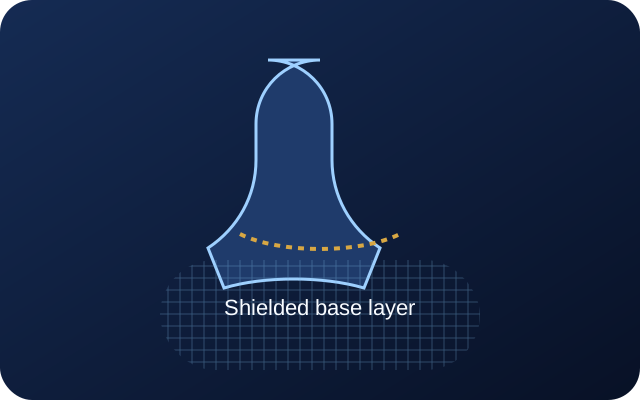
  • Radiation-shielding briefs and base layers
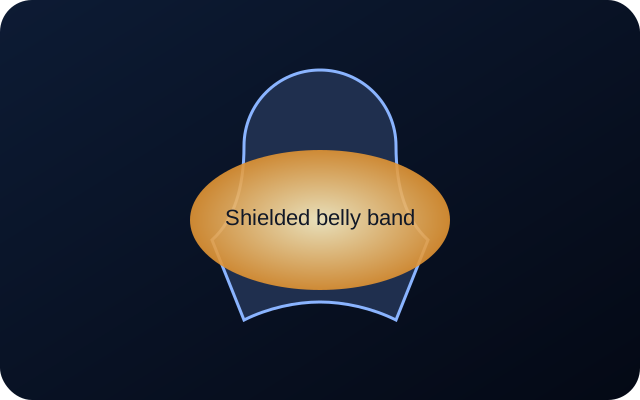
  • Anti-radiation maternity belly bands
  • Thyroid-sparing scarf inserts for neck coverage

What they are made of

  • Silver-infused fabric
  • Bismuth-based barriers
  • Tungsten micro-fiber weaves
  • RF/EMF shielding fabrics

Who should consider them

  • Crew flying polar or high-latitude routes (FRA, ICN, NRT, etc.)
  • Long-haul flight attendants who log hundreds of block hours monthly
  • Pregnant crew or anyone planning fertility treatments
  • Crew members with elevated cancer risk or medical guidance to reduce exposure

What they do (and do not) protect

Protect:

  • Soft tissues
  • Reproductive organs
  • Breast tissue
  • Thyroid region when paired with inserts

Limitations:

  • They do not block solar particle events or cabin-wide exposure.
  • Protection is localized to the fabric coverage area only.
  • You still need radiation tracking apps and schedule management.

These garments lower localized dose but do not erase total exposure. Combine them with route bidding strategies and real-time monitoring to cut cumulative risk across thousands of flight hours.

Radiation-protective undergarments designed for flight attendants
Radiation-protective base layers stay invisible under uniforms
Maternity radiation-shielding band for pregnant cabin crew
Shielded maternity belly bands focus on reproductive organs

Skin cancer prevention

Protect your largest organ on every layover

  • Apply SPF 30+ zinc sunscreen on every layover, even in winter.
  • Wear hats and UV-rated sunglasses during ground transport.
  • Choose shade whenever possible between segments.
  • Book annual skin checks and document any suspicious lesions.
  • Avoid tanning beds—the risk compounds with in-flight radiation.

Pregnancy and fertility

Circadian disruption and reproductive health

Risks to monitor

  • Radiation
  • Chemical exposure
  • Fume events
  • Jet lag
  • Shift work
  • Lifting strain

Pregnancy safety steps

  • Request accommodations as soon as pregnancy is confirmed.
  • Avoid deicing fumes and ensure ventilation before boarding again.
  • Minimize night flying and reduce back-to-back time-zone swings.
  • Wear radiation-shielding maternity belly bands approved by your provider.
  • Maintain stable sleep patterns and consider 0.5–1 mg melatonin if recommended.

Musculoskeletal health

Prevent crew-back and shoulder injuries

  • Never lift passenger bags—ask for gate checks or assistance.
  • Use a three-point stance when lifting galley inserts or emergency gear.
  • Strengthen core, glutes, and hips to stabilize during turbulence.
  • Wear supportive shoes with shock absorption that fit airline policy.
  • Double-check cart latches before taxi, takeoff, and landing.

Mental health

Burnout, depression, and suicide prevention

Why risk is elevated

  • Isolation
  • Irregular schedules
  • Passenger aggression
  • Trauma exposure
  • Chronic fatigue
  • Workplace stress

How to protect mental health

  • Create a layover wellness kit (hydration, grounding card, light therapy).
  • Practice one grounding ritual per trip (journaling, stretching, breathwork).
  • Avoid doomscrolling before crew rest or hotel sleep blocks.
  • Contact EAP or CIRT confidentially at the first sign of distress.
  • Maintain personal support systems even across time zones.

Safety gaps

What airlines do NOT provide

Cabin crew must often self-fund critical PPE and monitoring tools. Keep receipts for potential reimbursement.

  • CO detectors issued to crew
  • VOC sensors for onboard troubleshooting
  • Radiation trackers integrated with schedules
  • Radiation-protective undergarments or maternity bands
  • Consistent pregnancy accommodations across bases
  • Mental-health resources onboard
  • Fume-event emergency kits

Conclusion

Protecting flight attendant health in a high-risk industry

Flight attendants are first responders of the sky, but safety must cover your own lungs, skin, reproductive health, mental health, and legal standing. Combine evidence-based tools, radiation-shielding garments, hydration, rest strategies, and statutory leave rights. FALDF is here to support you confidentially when retaliation or medical crises put your livelihood at risk.

Need media-ready assets?

Visit the Flight Attendant Health press toolkit for snippets, link maps, alt text, and schema.

We moved those details off the main article so crews can read without distractions while comms teams still have everything they need.

Open the press toolkit →

Stay connected

Essential HFWA allies

HFWA vs. Airlines Timeline

Track every settlement, lawsuit, and CDLE ruling tied to Colorado sick-leave fights.

Visit →

Attorney Panel

Contact Colorado-based litigators handling HFWA, FMLA, and leave-misuse investigations.

Visit →

Investigation Survival Guide

Step-by-step plan for when management says your leave was "misused."

Visit →